Jurij Rahimkulov is a Sweden-based designer working with furniture, material systems and large-scale 3D printing. His practice does not follow the usual logic of the design industry. Instead, it is shaped by a working method that keeps ideas open. He is interested in the moment before things resolve – when form, material and process are still negotiating their roles.
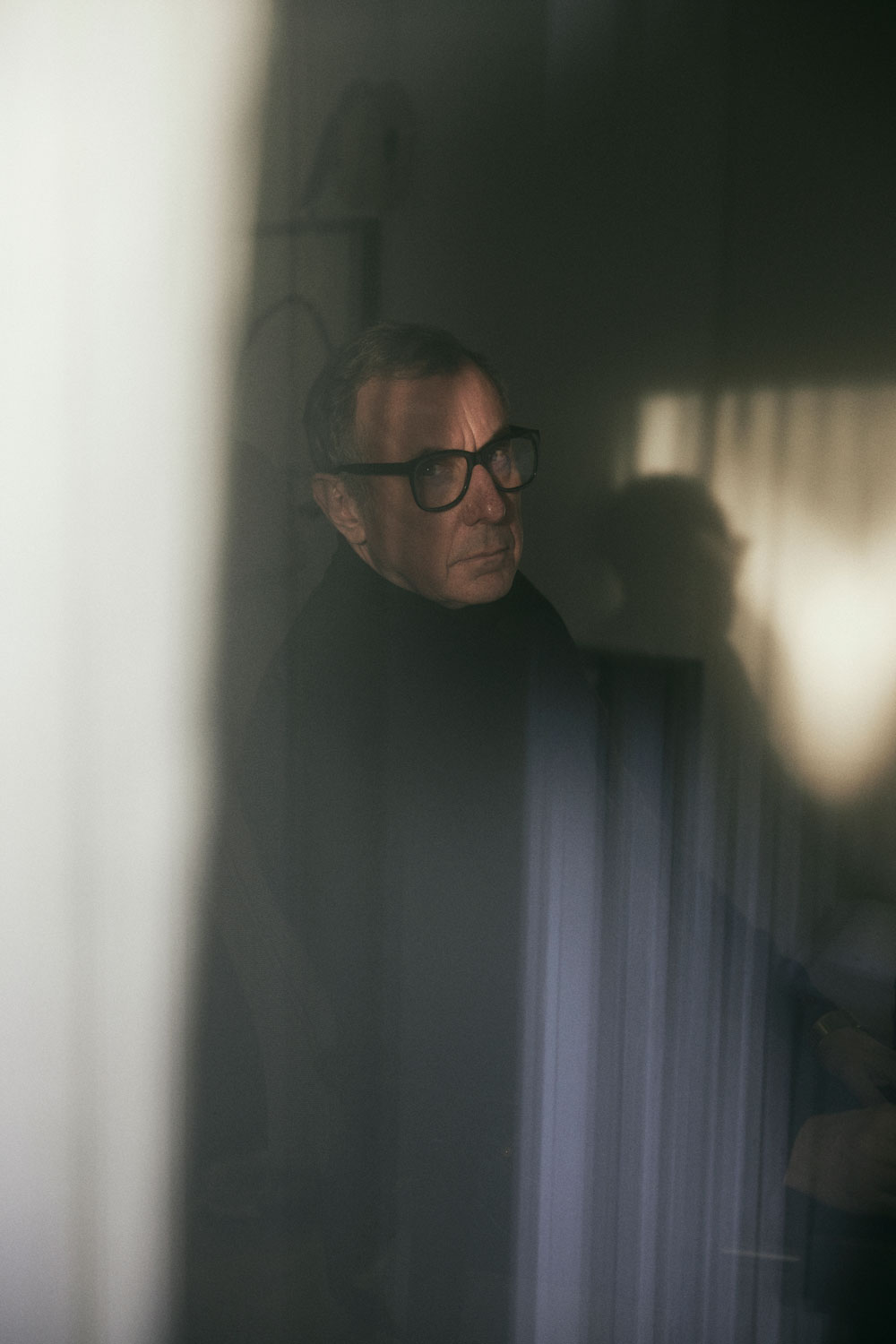
Based in Kullavik, just south of Gothenburg, Rahimkulov works according to a rhythm that feels very personal. Nothing is released because it is ready for the world – only when it feels complete to him. Photographer Alice Johansson captured him in his home in Kullavik.
Rahimkulov’s work is often framed through technology, particularly large-scale 3D printing, but that perspective misses the point. Technology is not what he is trying to show. It is simply what allows him to work in a way that makes sense, somewhere between handcraft and industrial production, without fully belonging to either.
He began working with 3D-printed furniture long before the tools became widely available. At the time, there was no category for it, no clear destination.
What interested him was not speed or novelty, but how close the tools could come to everyday life. He often returns to that shift. “Five years ago there wasn’t a single 3D-printed chair in the world. We were first,” he says. “Now you can buy a printer at a hardware store.”
Once technology stops feeling exceptional, it starts to change how people think about making. “When technology gets that close to people, it stops being special – and that’s when it actually starts to matter.”
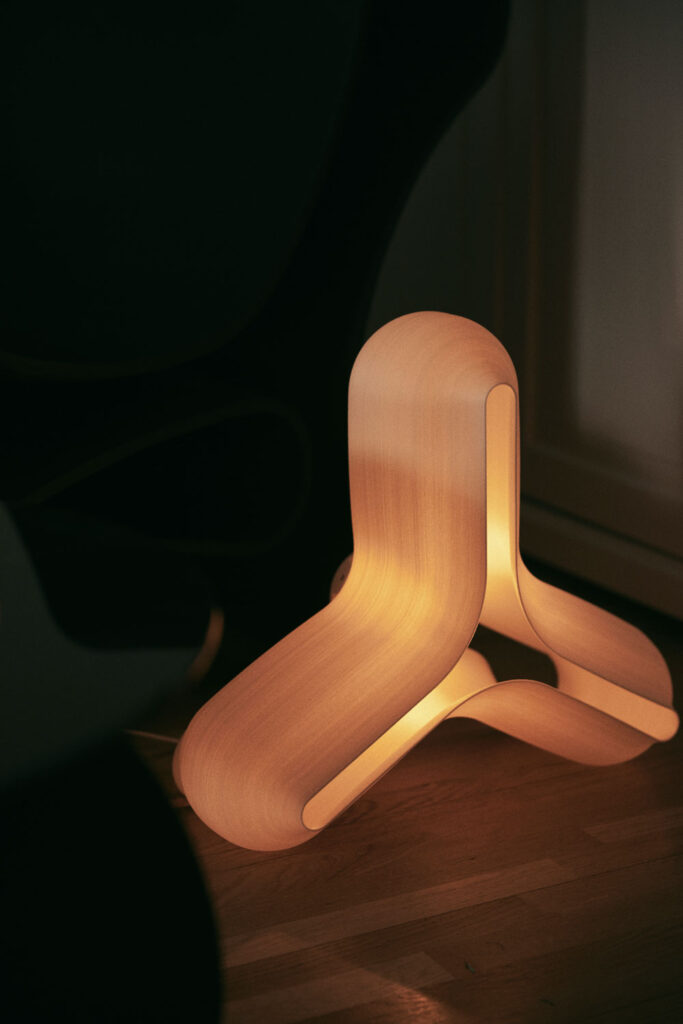
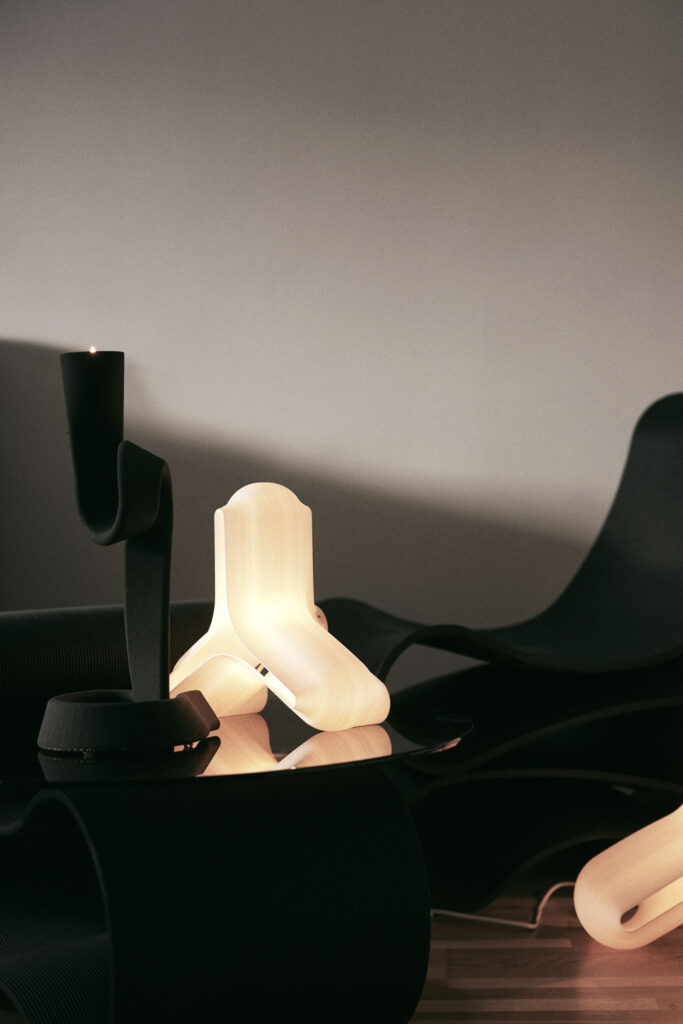
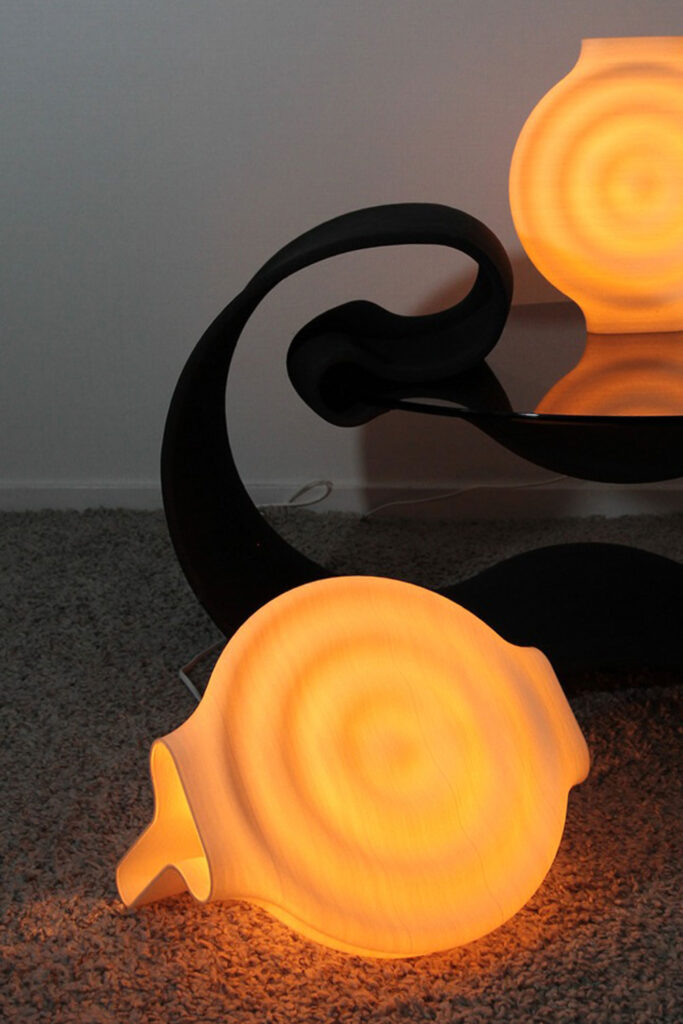
That way of thinking continues into how his work is made. Rahimkulov works with recyclable biocomposites and decentralised manufacturing, printing objects close to where they are used. Long supply chains, heavy transport and material waste feel increasingly detached from how he wants to operate. What matters instead is continuity – creating systems where material can return to itself and objects are not treated as dead ends.
“Plastic isn’t the problem. It’s how we use it. A bottle should become a bottle again. A chair should become a chair again.”
Thinking differently without fanfare
Rahimkulov assumes that the first solution is rarely the right one. If something appears too quickly, it usually carries the shape of something already familiar. Those early ideas are not rejected outright, but treated as part of the process, something to move through rather than commit to.
Most objects begin with fast work, often directly in 3D software, where proportions, surfaces and weight can be adjusted without hesitation. After that, the pace changes. Work is put aside and returned to later, once enough distance has formed. “I have to let things rest,” he says. “If you move too fast, later you see that it doesn’t hold all the way. You have to be critical with yourself.”
That distance is where decisions are made. Ideas that feel resolved too early are often abandoned, even if they function well. What matters is whether the object still feel right after time has passed.
“Most first ideas look like what everyone else does. You have to keep sketching until something else appears. Something that doesn’t need to explain itself.”
The same thinking shapes how he approaches design more broadly. He is sceptical of objects that rely on added meaning, symbolism or narrative framing to justify their existence. What matters instead is clarity: how something sits, how it works and how it holds its material. An object should not need persuasion. As he puts it, “a chair is a chair. Not more than that.”
Growing up between places
Rahimkulov grew up in Moscow in a home where drawing was part of daily life. His father worked with traditional jewellery and illustration, and the house was always filled with pencils, paper and colour. Making things was simply what you did. “You either sat and drew, or you went outside,” he says. “That artistic atmosphere was just part of the family.”
He also spent long periods in Tbilisi after his mother moved there, travelling back and forth between Georgia and Moscow. The two places were very different, but at the time he didn’t think much about it. It was just where life happened. Looking back, it’s clear that moving between them shaped how he relates to objects and surroundings – not as something fixed, but as something that depends on where and how it’s used.
He came to Sweden in his twenties, just as the Soviet Union collapsed. For a period, he didn’t belong to any country at all. He carried a passport from a state that no longer existed, and waited several years for a new one. That experience stayed with him. Being without a clear place to belong became normal, in a strange way.
“In Russia, I’m Swedish. In Sweden, I’m Russian. Inside, I’m both. But my design language comes from Sweden – the calmness, the clarity and the need for things to feel honest.”